
When an international buyer considers purchasing a property abroad, factors such as climate, construction quality, and location are obvious. However, there is a structural element that determines the true strength of a real estate destination: air connectivity. By 2026, the Costa Blanca will consolidate its position as one of the best-connected residential markets in the Spanish Mediterranean, supported by traffic figures and a network of destinations that confirm its role as a gateway to Europe.
An airport with a distinctly international focus
Alicante-Elche Miguel Hernández Airport closed 2025 with a new all-time record of nearly 20 million passengers, far exceeding the figures of previous years and confirming sustained growth in international traffic.
These figures reflect an expanding air travel market that transcends seasonality. The beginning of 2026 has maintained this trend, with more than 1.1 million passengers in January, a year-on-year increase of 4.7% and the best figure ever recorded for that month.
The fact that confirms its global reach is particularly relevant: a large majority of travelers operating in Alicante come from abroad, with key markets such as the United Kingdom, the Netherlands, Germany, Belgium, and other European countries leading the traffic volume.
During the 2026 summer season (April–October), connectivity projections point to a network of more than 140 direct destinations linked to the airport and connections with more than 30 countries in Europe and North Africa, consolidating a network that supports the flow of international visitors and business owners.

Connectivity and Real Estate Investment: A Direct Relationship
From an investor’s perspective, connectivity is not an afterthought. It’s an indicator of market depth and potential for appreciation in the medium and long term. A destination with high international accessibility generates three fundamental effects:
First, diversification of demand. The Costa Blanca is not dependent on a single source market. The wide range of connections to the United Kingdom, Germany, the Netherlands, France, and the Scandinavian countries reduces exposure to specific economic cycles and provides structural stability.
Second, future liquidity. A well-connected market significantly expands the pool of potential buyers in the event of resale, facilitating the exit of the investment.
Third, destination resilience. Established air infrastructure tends to recover more quickly from economic changes, minimizing the impact of adverse circumstances and reinforcing the confidence of those planning long-term investments.
In other words, connectivity not only facilitates travel, but also strengthens the property value of residences on the Costa Blanca.
Year-Round Accessibility
Direct and frequent connections to cities like London, Manchester, Amsterdam, Frankfurt, Brussels, Warsaw, Oslo, and Paris allow you to reach the Costa Blanca in just a few hours, nonstop, with multiple weekly options. This route network makes the Costa Blanca an accessible and competitive destination compared to other Mediterranean cities.
For international homeowners, this accessibility translates into tangible advantages: easier short breaks, more frequent use of the property, convenience for family and friends, and improved holiday rental performance. Accessibility transforms a second home into a truly usable residence, not merely a seasonal asset.
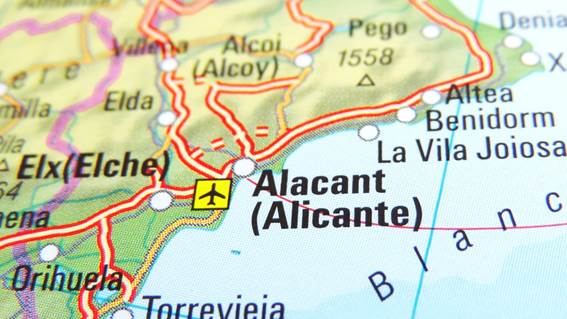
2026: An exceptionally favorable environment
The combination of excellent international connectivity, a stable year-round climate, established infrastructure, and a dynamic real estate market with strong international demand places the Costa Blanca in a strategic position within the European residential market. In this context, the specific location and quality of the project become even more crucial as differentiating factors.
Investing in the Costa Blanca in 2026 is not simply about acquiring a home on the Mediterranean. It means positioning yourself in a market supported by solid fundamentals: robust air infrastructure, diversified international demand, continuous accessibility, and structural stability.
Connectivity is not just an isolated factor. It is a clear sign of consolidation that provides security, liquidity, and a promising outlook. At MPC Group, we remain committed to developing projects in one of Europe’s best-connected destinations, offering our clients not just a home, but an investment backed by tangible foundations.